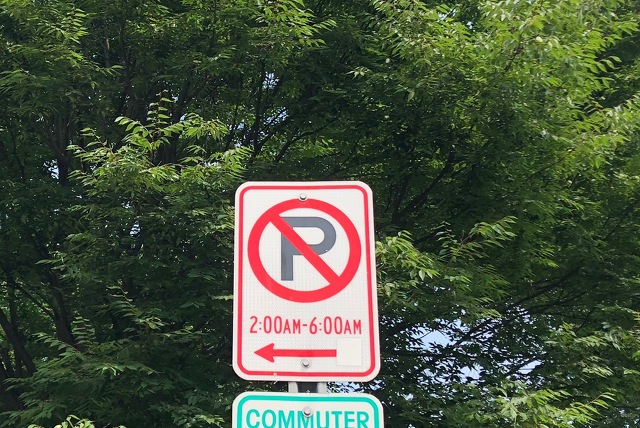
The days of free overnight street parking in some State College neighborhoods during home Penn State football weekends may be coming to an end.
State College has long lifted the “no parking 2 a.m. to 6 a.m.” restriction on football weekends and during other special event times. But under a proposed pilot program presented to the Borough Council by Parking Department officials on Monday, the overnight restriction would remain in effect for the College Heights, Highlands and Holmes-Foster neighborhoods, and drivers would instead need to pay for street parking during those times.
Parkers would be required to pay $25 for a 24-hour pass or $50 for a weekend session covering 2 a.m. Saturday to 6 a.m. Sunday using the Honk mobile parking app.
The pilot would be in effect from August to December, if approved by council. Should the program continues beyond that, the payment requirement for street parking in the three neighborhoods would also include the Central Pennsylvania Festival of the Arts in July 2027. Council can also add other special event times at its discretion.
“We have a lot of things in place that can do this already,” Parking Department operations supervisor Matthew Pieper said. “We are actually extremely close without the need for a lot of additional work to at least kick off the project. When we introduced Honk as a platform into the borough, it came with neighborhoods as geographical zones. If this pilot is approved, moving forward the only thing we really have left to do is physical signage and also just the mapping of a payment checker into a computer system, and then it can be as good as ready for football season this year.”
Football weekends and the Arts Festival are among the times when increased special event parking rates are already in effect at borough garages and meters.
The department is also proposing that holders of parking permits assigned to the Beaver, Pugh, Fraser garages and McAllister Deck will be authorized to utilize street commuter zones on Saturdays during Penn State football games.
“We want to make sure that commuter zones are there for the people that are down here working with their commuter zone permits,” Pieper said. “So … we are proposing that during the time period where even a garage permit holder cannot find parking and they work downtown, they’ll be able to use the commuter zone on these home football Saturdays specifically to help with the ecosystem.”
Council is expected to discuss the pilot program at its work session on Monday, June 8, and vote on the proposal during its regular meeting on Monday, June 15.
One-Way Street Changes
Council also received an overview of another proposed pilot program to convert segments of four downtown streets —the 100 blocks of Locust Lane, Hiester Street, Sowers Street and Hetzel Street — to one-way pairs.
As previously reported by StateCollege.com, Locust Lane would be one-way southbound (toward East Beaver Avenue) and nearby Hiester Street one-way northbound (toward East College Avenue). For the other couplet, Sowers Street would be one-way southbound and Hetzel Street one-way northbound.
Eliminating one travel lane on each of the four street segments would allow for the addition of approximately 32 metered parking spaces and five loading zones, borough transportation engineer Ron Seybert said on Monday.
It would also establish consistent traffic patterns for student move-in at several apartment buildings, which typically require temporary lane closures and directional restrictions every August, and would address what Pieper previously described as “extremely dangerous and unsafe parking actions” on the eastern side of downtown.
“In this area of town, what we often see is people waiting on the wrong side of the road for pick-ups and drop-offs,” Pieper said at a State College Transportation Commission meeting in May. “We have a lot of semis and folks like that sitting on Beaver and Garner, creating a lot of unsafe situations. This is just an idea to help clear out all of that while giving more legal space for people to do their operations.”
The street segments have relatively low traffic volume and intersections are controlled by stop signs, so there would be no impact on traffic signals.
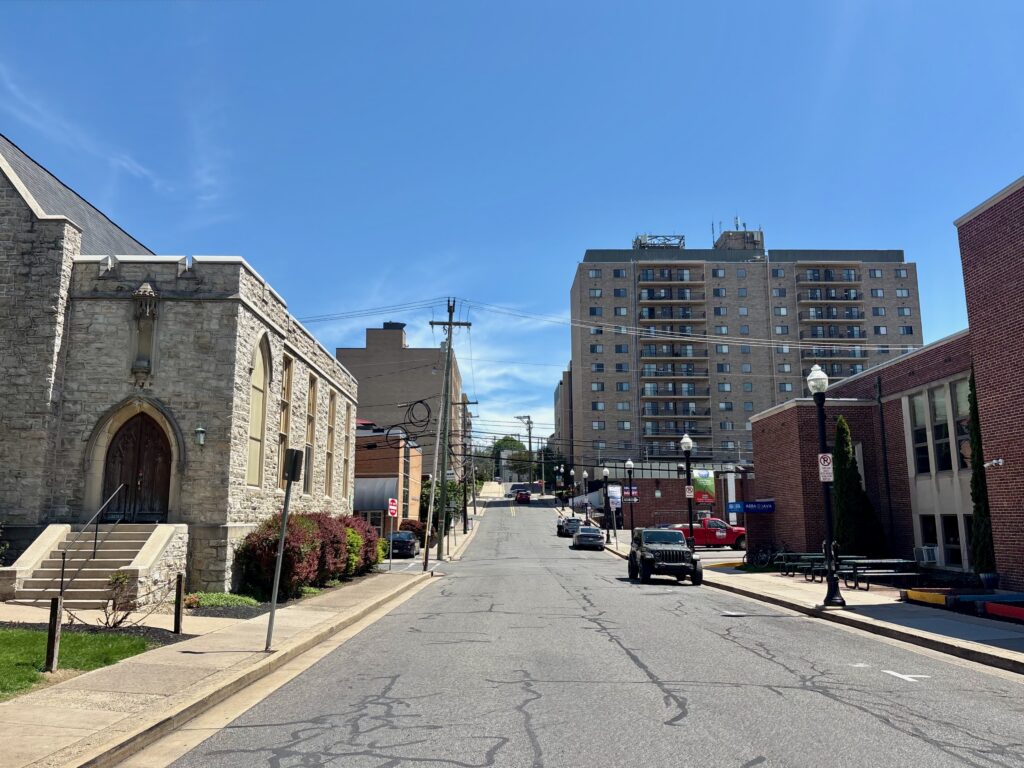
Seybert said the cost of implementation is low and can be predominantly accomplished with paint and signs. Eliminating one travel lane also provides the opportunity for potential future sidewalk widening, pedestrian nodes and other amenities.
Drawbacks include adding distance to vehicle and bicycle trips, possible traffic delays due to fewer turn options, potential for wrong-way movements and, initially, confusion until drivers become familiar with the patterns, Seybert said.
The Transportation Commission recommended in May approval of a one-year trial period for the one-way changes, which were developed with feedback from the Downtown State College Improvement District and borough Retail Advisory Committee.
“This duration would allow for observation of operations throughout various times of the year and to make any needed adjustments, complete the engineering study for the one-way streets, or terminate the trial if necessary,” according to information included in Monday’s council meeting agenda.
Borough council will discuss the proposal during the June 8 work session and vote on it at its June 15 regular meeting.